
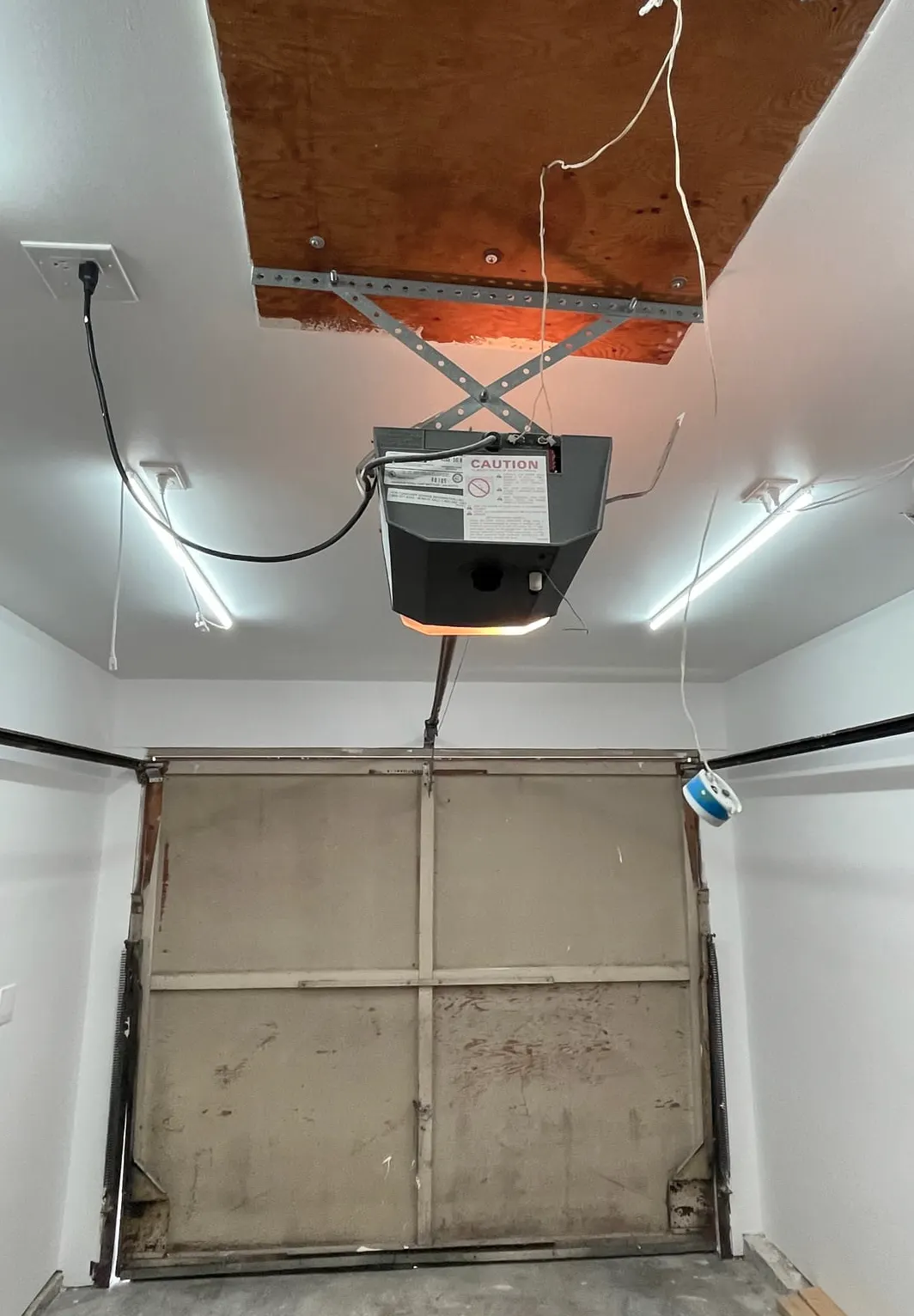
The Mistake: Fixing Whatever Broke This Time
The call almost always starts the same way. The opener grinds, stutters, or just stops responding, and the homeowner asks for whatever gets it working again today. That instinct makes sense — a gear kit or sensor repair is a small bill, usually in the $100–$300 range, while a full opener swap can run $350–$700 installed. So people patch the symptom and move on.
The problem is that this decision gets made one repair at a time, without ever asking how old the unit is or what's likely to fail next. A homeowner can end up paying for a gear kit this year, a logic board next year, and a full replacement the year after — spending more in total than if they'd replaced the opener up front, plus living with a door that keeps failing at inconvenient moments.
What's Actually Failing
Not all opener problems are equal, and the fix depends heavily on which part is going:
- Stripped gear kit — mechanical, cheap, common on chain-driven units once the factory grease breaks down
- Worn chain or belt — mechanical, moderate cost, usually isolated
- Logic board failure — electrical, and once it goes, it's often a sign the rest of the electronics are close behind
- Capacitor or motor winding failure — electrical, expensive to repair relative to the age of the unit
- Sensor drift or dirty lenses — usually a cheap fix, but recurring drift can point to a failing board
The first two are classic repair candidates. The last three are where replacement starts making more financial sense, especially on an older unit.
When Repair Wins
- The opener is under roughly 8 years old
- The failure is a single mechanical part — gear kit, chain, or a misaligned sensor
- This is the first service call on the unit in a year or more
- Existing safety sensors and force settings are already calibrated correctly
In this situation, a repair in the $100–$300 range gets the door back in service without touching wiring at the header, and there's no reason to replace a motor that still has years left in it.
When Replacement Wins
- The opener is 10–15+ years old, especially a chain-driven model
- The failure is electrical — a board, capacitor, or motor winding
- This is the second or third repair call within 12–18 months
- The household wants battery backup for power blips during monsoon storms, or wants rolling-code security and app monitoring that older units don't have
Electronics in particular don't tolerate the heat cycling that Tucson-area garages put them through. A board that's baked through repeated 110-plus-degree summers and then cooled on desert nights for a decade is a board on borrowed time, even if it's working again after a repair.
The Five-Year Math
Here's where the trade-off gets explicit. Picture two paths for a 10-year-old opener that just failed:
Scenario A: Repair-Only Path
- Year 1: Gear kit replacement — around $150
- Year 2: Sensor realignment after dust gets into the lenses during monsoon season — around $100
- Year 3: Logic board failure — around $200, plus a service call fee each visit
- Year 4: Capacitor failure strands the door shut — opener finally gets replaced anyway, around $500
Total over five years: roughly $950, plus four separate service visits and at least one stretch where the door wouldn't open at all.
Scenario B: Replace Now
- One installation cost, typically $350–$700 depending on the unit and features
- Manufacturer warranty covers most failures for the first several years
- Newer components tolerate heat cycling better than a decade-old board
- Battery backup keeps the door operational during power interruptions from summer storms
Total over five years: the upfront cost, with a much lower chance of an unplanned repair bill stacked on top.
The trade-off is simple to state: repair preserves cash today but gambles on what fails next. Replacement costs more up front but caps the five-year spend and ends the pattern of repeat service calls.
The Recommendation for Typical Desert Homes
For a garage door opener under 8 years old with one isolated mechanical failure, repair it. The parts are inexpensive and the motor almost certainly has years of life left.
For an opener in the 10-to-15-year range — particularly one that's had a sensor issue, a board problem, or more than one service call in the past year or two — replacement is usually the cheaper decision once the full five-year picture is considered. The dry heat here is hard on lubricants and plastic gears, UV exposure fades and weakens housings mounted near sun-exposed windows, and monsoon dust works its way into sensor lenses and circuit boards faster than in milder climates. An opener that's already shown one electrical symptom is a reasonable bet to show another within a year or two.
For garages that get heavy daily use — multiple vehicles, a home business, frequent in-and-out trips — it's worth stepping up to a heavier-duty unit when replacing, since the extra cycles per day shorten the lifespan of a standard residential opener regardless of climate.
When to Call Tucson Garage Door Repair
If your opener has failed more than once in the past year, or it's old enough that nobody remembers installing it, it's worth getting a straight answer instead of guessing. Tucson Garage Door Repair handles both Opener Installation & Repair and general Garage Door Repair, and on a service call we'll check the age and condition of the motor, the board, and the drive system before recommending a fix. If a repair genuinely makes sense, that's what we'll do. If the unit is past the point where another patch is worth it, we'll install a new opener built for the heat, with battery backup options for monsoon season, and get it done the same day in most cases.
Homeowners across Tucson, Oro Valley, Marana, Sahuarita, Vail, Catalina Foothills, Casas Adobes, and Green Valley can call for same-day service and an honest opener assessment — no guesswork, no upsell, just a clear recommendation for your actual situation.