
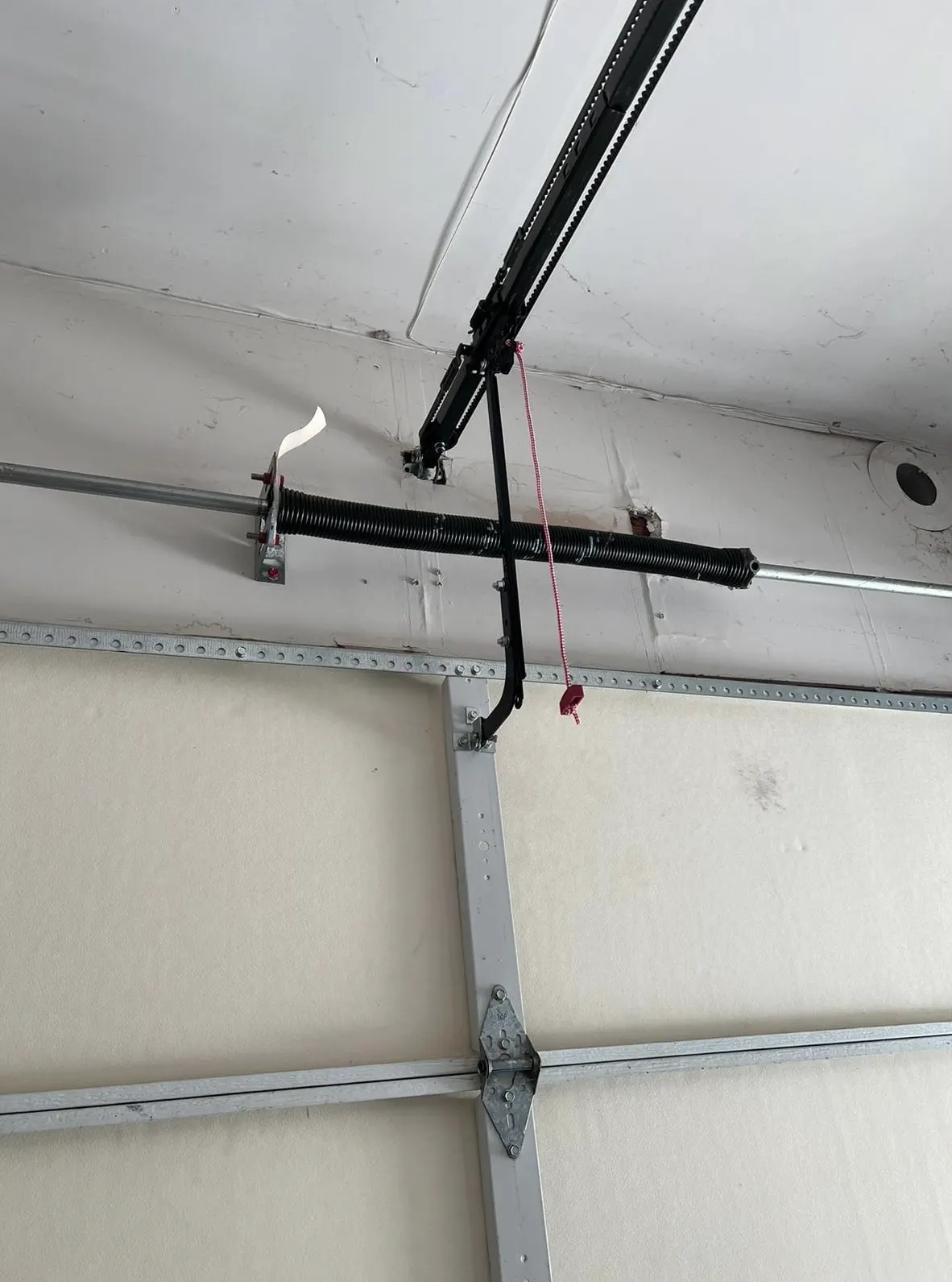
One of you noticed it first. Maybe it was the thin, silvery hairs sticking out of the cable near the bottom bracket, catching the light when you pulled in from work. Maybe it was that rhythmic thunk-thunk-thunk every time the door opens, the one you've started talking over instead of asking about. Now you're standing in the garage having the same conversation every homeowner eventually has: "Is this actually a problem, or are you being dramatic?"
Here's the honest answer: it depends on which part you're looking at, and how far gone it is. Let's settle it.
What's Actually Making That Noise (or Fraying Like That)
Garage doors have two unglamorous parts that do most of the heavy lifting and get almost none of the attention: the lift cables and the rollers. Neither one is the garage door opener, and neither one is the spring, though people often blame those two for problems that actually start here.
Frayed Cables — Quiet Until They're Not
The cables run from the bottom corners of the door up to the drum near the torsion spring, and they're under serious tension any time the door is closed. When you see fraying, you're looking at individual strands of wire breaking off from the cable as a whole. It doesn't happen all at once. It starts small: one strand, then a few, usually near the bottom bracket or where the cable wraps around the drum.
The problem is that a frayed cable gives almost no warning before it fails completely. There's no gradual slowdown, no squeak that gets louder for weeks. One day it holds, the next day it snaps, usually under the stress of opening or closing, and the door can drop unevenly, jam sideways in the tracks, or come down hard and fast on one side. If anyone or anything is under the door when that happens, it's not a minor inconvenience anymore.
Worn Rollers — The Rattle You Learn to Ignore
Rollers are the wheels that ride inside the track and let the door glide up and down. They take the opposite path from cables: instead of failing silently, they tend to announce themselves loudly and often, for months, before anything serious happens. A worn roller grinds, squeals, or clunks every time it rolls past a joint in the track. The door might also start to shudder slightly as it moves, or hesitate at certain points.
Worn rollers are far less dramatic than a snapped cable, but they're not harmless. A roller that's cracked, flat on one side, or missing its bearing housing puts uneven stress on the track and the door's hardware. Left alone long enough, a bad roller can pop out of the track entirely, bend the track, or force the opener to work harder than it should, which shortens the opener's life too.
Why These Parts Wear Out Faster Out Here
This isn't a universal timeline. Southern Arizona is genuinely rough on both of these components, for a few specific reasons.
- Heat breaks down lubrication fast. Cables and roller bearings both rely on a thin layer of grease or lubricant to move smoothly and resist corrosion. Extreme dry heat cooks that lubricant off far quicker than it would in a milder climate, leaving metal-on-metal friction that accelerates wear on both parts.
- UV exposure degrades nylon rollers. If your rollers are the nylon-and-bearing type rather than solid steel, direct sun and heat on an uninsulated garage door can make the nylon brittle and prone to cracking years before a shaded, insulated setup would show the same wear.
- Monsoon dust works its way into everything. Blowing dust settles into the track and onto the cables, mixing with whatever lubricant is left to form a gritty paste that grinds against metal every time the door moves.
- Cool desert nights add stress cycles. The swing between hot days and cool nights causes repeated expansion and contraction in metal hardware, which over time contributes to metal fatigue in cables, especially ones that are already carrying a hidden weak point.
The Two-Minute Test That Settles the Argument
You don't need tools for this part, just eyes and a flashlight, and the door should stay closed and the opener unplugged while you look.
- Check both cables along their full visible length, especially near the bottom brackets and where they wrap around the drums at the top. Any sticking-out strands, kinks, or rust spots mean the cable is compromised, not just dirty.
- Spin each roller by hand if you can reach it safely. It should turn smoothly with no grinding, no flat spots, and no visible cracks in the roller wheel itself.
- Look at the track where the rollers ride. Dents, gaps at the joints, or a track that's pulled slightly away from the wall often trace back to a roller that's been struggling for a while.
If either cable shows fraying, stop opening and closing the door by any means, including the opener, until it's replaced. That's not caution for its own sake, it's because a cable under tension can fail the moment it's asked to do its job one more time. Worn rollers are less urgent, but a door that's grinding and shuddering now will eventually jump the track or strain the opener motor, so it's a fix-it-this-month problem, not a fix-it-eventually one.
When to Call Tucson Garage Door Repair
If you've found fraying anywhere on a cable, that's a same-day call, not a weekend project. Cables are under high tension and sit close to the torsion spring system, and replacing them safely means releasing that tension correctly first. Our team handles cable replacement alongside spring inspection, since a fraying cable and a tired spring often show up around the same time in the same garage.
If it's rollers making the noise, we'll check the whole set, the track alignment, and the bearings, and replace only what's actually worn rather than the whole assembly. Track & Roller Repair is usually a straightforward fix when it's caught at the grinding-noise stage rather than the jumped-the-track stage.
Either way, you don't have to guess who was right. Call Tucson Garage Door Repair and we'll tell you straight, then fix whichever one it actually is, same day, anywhere from Tucson to Oro Valley, Marana, Sahuarita, Vail, Catalina Foothills, Casas Adobes, or Green Valley.