
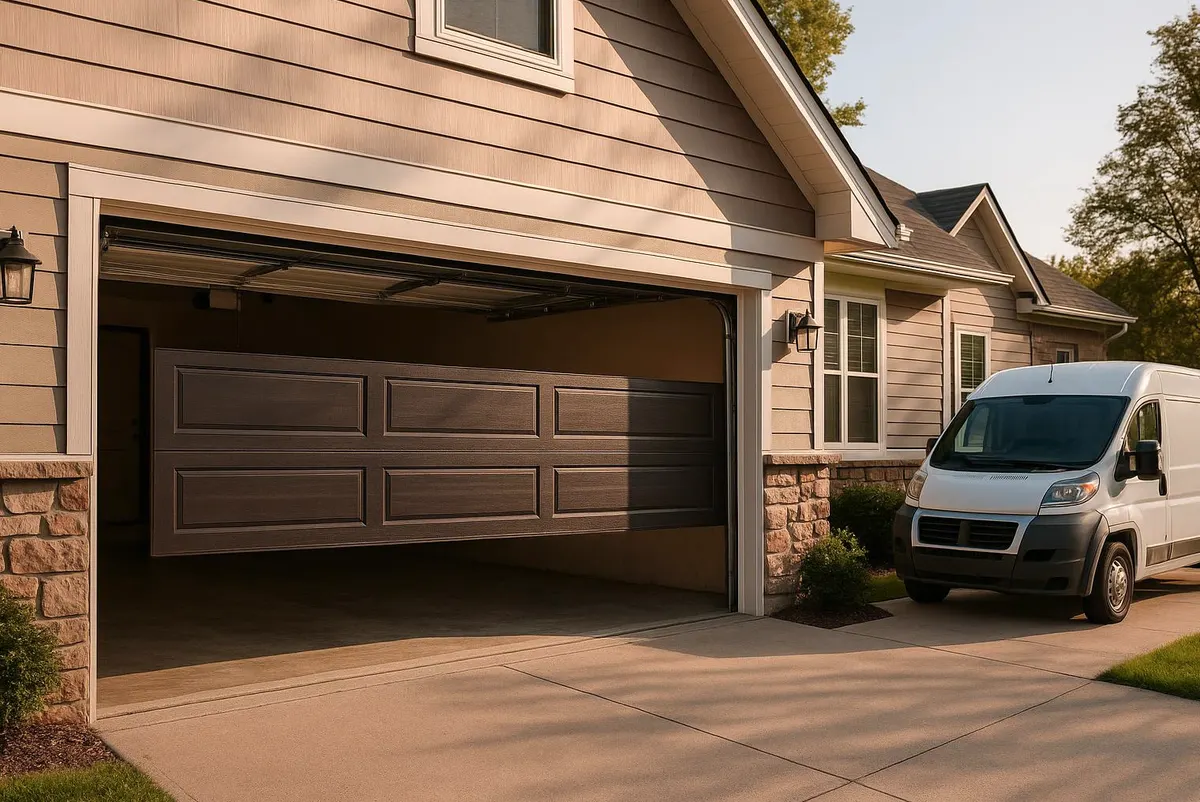
What Another Season of Neglect Actually Costs
Skip the pre-storm check this year and the bill isn't hypothetical. A door that buckles under wind pressure doesn't just need a panel swap — it can rip the track off the wall, snap the opener's drive gear, and leave a hole in your home's envelope during the exact moment wind-driven dust and rain are trying to get in. Once that happens, you're not looking at a simple adjustment; you're looking at emergency same-day service, a damaged opener, and possibly interior water or dust damage to whatever was stored or parked behind that door. The fix now — an inspection, some hardware, maybe a reinforcement kit — is almost always cheaper and faster than the fix after.
Why the Garage Door Is Your Home's Weakest Wall
Every other wall in your house is a solid, continuous structure. Your garage door is a moving panel of thin steel or aluminum, held in place by tracks, rollers, and a spring system, covering the largest opening in the building. When straight-line wind or a sudden gust front hits a house, that door takes the brunt of the pressure differential. If it fails — buckles inward, pops off the track, or the opener's weak gear lets it slam open — wind can pressurize the whole garage and put stress on the roof structure from the inside. This isn't a scare tactic; it's just physics. A large, thin, moving panel is inherently the most vulnerable point in an otherwise rigid structure.
That vulnerability is worse here than in milder climates. Months of intense UV exposure and dry heat bake the rubber weatherstripping, dry out track lubricant, and make steel panels more brittle at the seams. A door that looked fine in June may have degraded seals and stiff rollers by the time fall wind events roll through.
Signs Your Door Won't Hold Up to Wind
- Weatherstripping that's cracked, curled, or crumbling — UV exposure over a long, hot season breaks down rubber seals, leaving gaps where wind-driven dust and rain push straight through.
- Rollers that grind, stick, or wobble in the track — dried-out lubricant from months of dry heat means more friction, more vibration, and a door that's more likely to jump the track under pressure.
- Visible gaps between the door and the track or frame — even a small gap lets wind get a grip on the panel and pry at it.
- Panels with dents, warping, or loose hinges — a weak point in one panel is where the whole door will fail first under load.
- A door that doesn't sit flush or seats unevenly when closed — this usually points to spring tension that's off or a track that's slightly out of alignment, both of which reduce the door's ability to resist pressure.
Steps to Prep the Door Before Wind Season Hits
- Inspect and replace weatherstripping. Run a hand along the bottom seal and side seals. If it's stiff, cracked, or pulling away, replace it before the next storm, not after.
- Lubricate tracks, rollers, and hinges. Use a garage-door-specific lubricant, not household oil, which attracts dust and grit. Dry desert air eats lubricant fast, so this is worth doing more often than you'd think.
- Tighten all hardware. Brackets, hinges, and roller tracks loosen over time from daily vibration and heat expansion/contraction. A quarter-turn on a few bolts can be the difference between a door that holds and one that doesn't.
- Check spring tension and balance. Disconnect the opener and lift the door halfway by hand. If it doesn't stay put, the springs are no longer doing their job, and that means the door is relying entirely on the opener and track to hold position under wind load.
- Consider a wind-reinforcement kit for wide doors. Horizontal or vertical bracing kits add rigidity to the panel itself and are a reasonable investment for anyone who's had a door flex visibly in strong gusts.
- Test the opener's auto-reverse and battery backup. If a cold front knocks out power right as the wind picks up, a battery backup keeps the door operable so it's not stuck half-open.
- Clear the track and drainage path of monsoon dust buildup. Grit and fine dust accumulate in the track channel over the summer and can jam the door at the worst possible time.
The Timing Matters
Late-season monsoon remnants can still bring sudden gusts and dust into early fall, and as cooler fronts start moving through behind them, wind events pick up again before winter settles in. That overlap — dried-out seals and lubricant from a long hot stretch, right as wind activity increases — is exactly why this is the window to get ahead of it rather than wait for a door to fail mid-storm.
When to Call Tucson Garage Door Repair
If your rollers are grinding, the door won't balance, or you've noticed daylight around the edges when it's closed, that's past the point of a DIY fix. Our Track & Roller Repair service gets worn hardware replaced and the door running true again, which matters more than most people realize when wind is pushing against it. If the door itself is dented, warped, or simply old enough that the panels have gone brittle under years of sun exposure, our New Garage Door Installation service can get you into a door built to handle real wind load instead of patching a structure that's already compromised. Either way, we show up same-day, diagnose it straight, and quote a fair price before any work starts.
Don't wait for the next wind event to find out your door's weak point. Call Tucson Garage Door Repair today and get it checked out before the season turns.